Bataan refugee camp
The SympathizerBataan refugee camp is where The unnamed narrator encounters boat people not only as a crisis reported in headlines but as displaced people in front of him. Visiting the camp while working on The Hamlet, he recruits a hundred refugees as extras for the film. Their need for wages and their accounts of what they have fled turn the camp into a point of contact between Hollywood’s staged war and the continuing upheaval of Vietnamese lives.
A recruitment site during film production
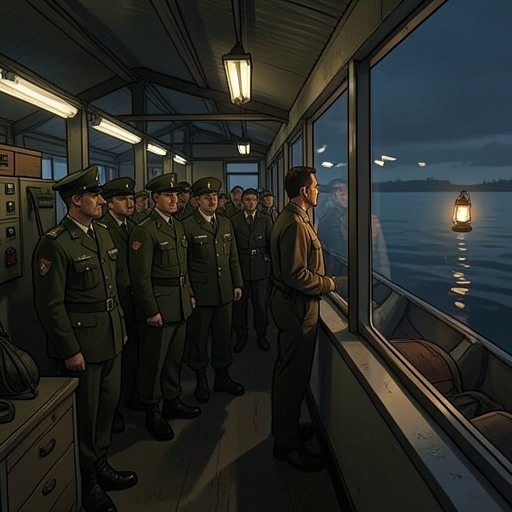
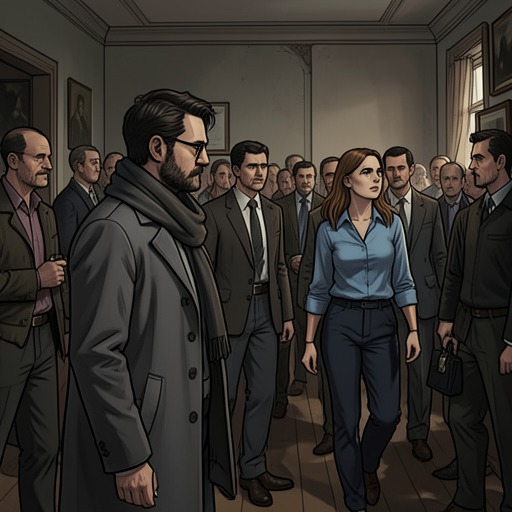
The unnamed narrator returns to Bataan refugee camp after first seeing it on a field trip. He has been assigned to recruit Vietnamese extras, and the camp supplies a hundred people for the production. The arrangement is starkly practical: each is offered a dollar a day. Not one bargains for a higher wage. The narrator, who had never imagined a Vietnamese person declining to haggle, reads that silence as evidence of how completely the usual balance of negotiation has shifted against them.
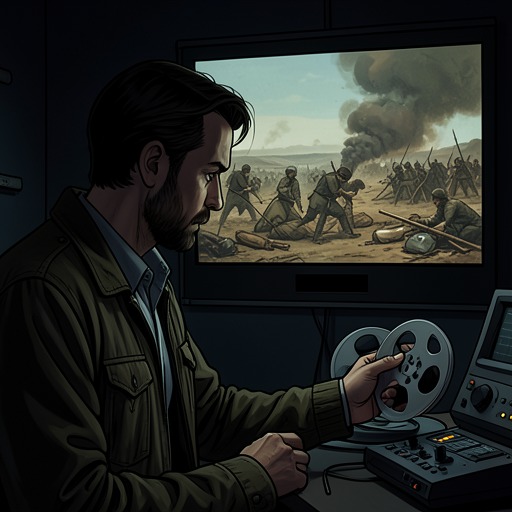
The recruitment makes the camp part of the machinery of The Hamlet, a film whose scenes and settings are being assembled for an American production. Yet the people brought in as extras are not simply performers entering a fictional Vietnam. They have fled their homeland, and their presence gives the film’s staged world an immediate connection to the real displacement around it. The narrator’s work joins the two without resolving the distance between them.
Conditions and accounts of displacement
The refugees’ appearance makes their hardship visible to the narrator: he describes mangy hair, crusted skin, chapped lips, swollen glands, and the smell of a fishing trawler. His description is blunt and deliberately uncomfortable; it records the condition of people who are hungry enough to accept the low wage without bargaining. Their desperation is legible both in their bodies and in the terms on which they agree to work.
Among the extras is a lawyer whose aristocratic appearance contrasts with the circumstances in which she now speaks. Asked whether conditions in Vietnam are as bad as rumored, she answers by comparing the pre-communist period, when foreigners victimized, terrorized, and humiliated the population, with the present, when their own people do so. Her bitter conclusion—that this might count as an improvement—complicates any simple account of liberation. The narrator trembles at the response. The encounter revives his unease over the death of The crapulent major and makes the condition of the refugees a challenge to the political explanations he has relied upon.
From the camp to the crossing
The narrator’s later account to The Commandant places the camp within a wider exodus. In a letter to his aunt, he includes Polaroids of the camp and its residents alongside newspaper clippings supplied by The General. Their headlines dwell on drowning, pillage, rape, and cannibalism. The General presents reports that only one in two boats survives the journey from the Vietnamese coast to nearby shores, with storms and pirates sinking the rest. The narrator records his uncertainty about whether these reports describe events accurately or serve as propaganda, and asks what it means for people to flee a revolution said to serve them.
The camp is therefore not presented as the endpoint of escape. It is a temporary setting within a dangerous passage from home, after which refugees still depend on sponsors to leave and establish themselves. The narrator himself secures support through Avery Wright Hammer, who arranges sponsorship and a clerical job; with the money raised by former teachers, he travels to Los Angeles and finds an apartment. He then seeks a sponsor for Bon, and the two are reunited by September. Their resettlement shows how a person’s prospects hinge on access to individual advocates and practical assistance, rather than on displacement alone.
Dispersal and the camp’s aftermath
The refugees’ departures from camp do not produce a single, stable community. The unnamed narrator describes families separated and people sent to different states, with former refugees exchanging addresses and phone numbers so they can compare jobs, taxes, welfare benefits, racism, and the presence of people with familiar food and customs. He imagines what a self-sufficient Vietnamese colony might have contained, but says bureaucratic decisions scattered people across the country instead. In their new places, small groups gather in basements, churches, backyards, and at beaches, trying to sustain community while finding that food made with ingredients from Chinese markets does not taste quite like home.
The different lives of those who leave camp underline the limits of resettlement. Bon, a highly trained former soldier, finds work as a church janitor and receives welfare; The crapulent major becomes a gas-station attendant while his wife sews in a sweatshop. Their experiences are not identical, but both show the distance between past skills and the work available to them. Bataan refugee camp’s significance lies in this movement from visible emergency to dispersed, less visible hardship—and in the doubts its residents’ testimony leaves with the narrator after the film crew has recruited them and moved on.